What time is it in Marbella, and is there a time difference with the rest of continental Europe? The short answer: no. Marbella is in the same time zone as Brussels, Paris and Amsterdam. Yet a day in Marbella feels completely different. The sun rises later and sets later, and the Spanish daily rhythm shifts with it. In this article we explain how summer time works in Marbella, when the clocks change and what that means for your daily life.
Is there a time difference between Marbella and the rest of continental Europe?
No. Mainland Spain, including Marbella and the whole Costa del Sol, uses Central European Time (CET, UTC+1) in winter and Central European Summer Time (CEST, UTC+2) in summer, just like Belgium, the Netherlands, France and Germany. So if you are flying in from any of those countries, there is no need to change your watch when you land in Málaga.
Note: the Canary Islands are one hour behind mainland Spain.
When do the clocks change in Spain?
Spain follows the European rules: summer time begins on the last Sunday in March and ends on the last Sunday in October.
| Clock change | Date | What happens? |
|---|---|---|
| End of summer time 2026 | Sunday 25 October 2026 | at 3am the clocks go back to 2am |
| Start of summer time 2027 | Sunday 28 March 2027 | at 2am the clocks go forward to 3am |
| End of summer time 2027 | Sunday 31 October 2027 | at 3am the clocks go back to 2am |
Will summer time be abolished?
Spain has been pushing in Europe for several years to scrap the clock change. The European Parliament voted in favour back in 2019, but the member states have not yet agreed on which time they would then keep permanently. A Spanish proposal to stop in 2026 did not succeed. So for now the clock change remains, and the European calendar runs until 2031. We will update this article if anything changes.
Why does it stay light for so long in Marbella?
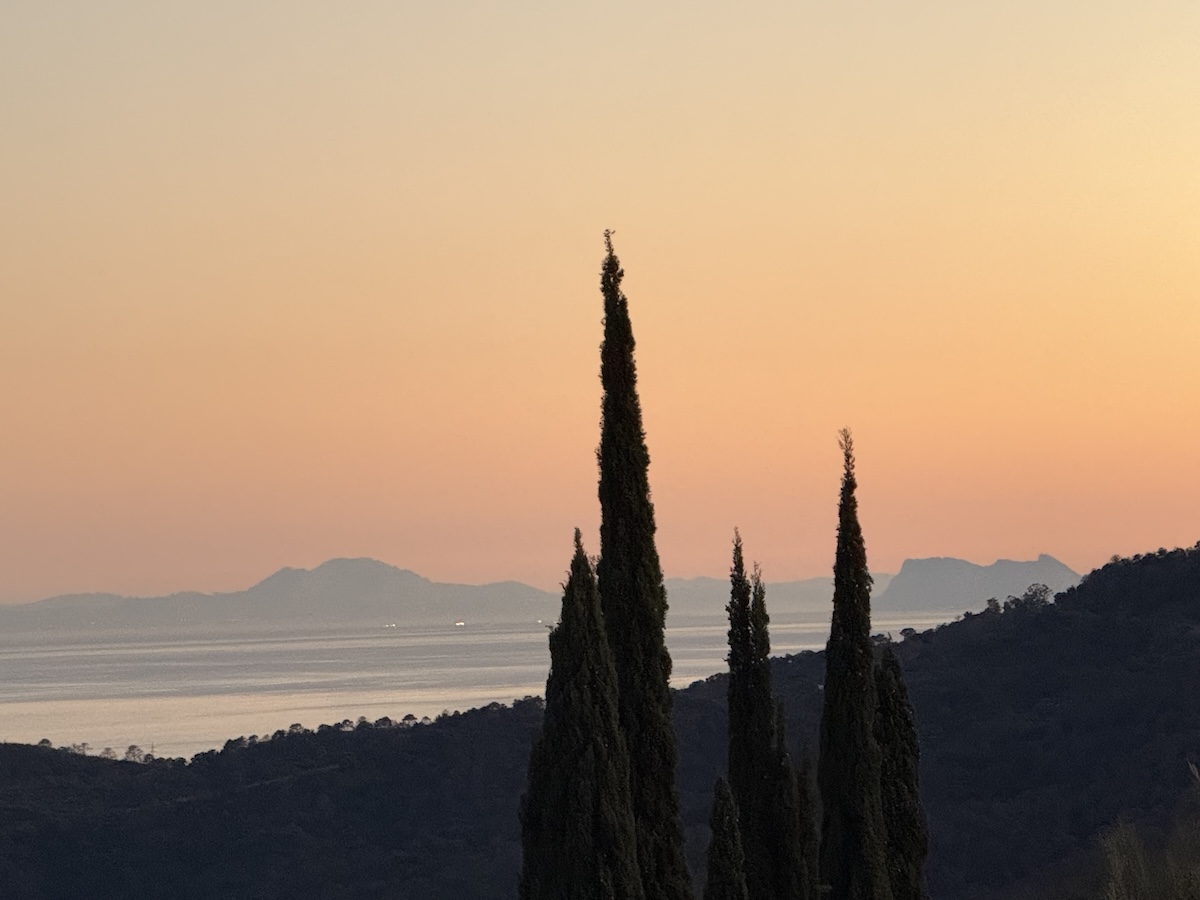
Geographically, Spain actually lies in the same time zone as Portugal and the United Kingdom, but it has used Central European Time since 1940. Marbella is also a good deal further west than Brussels or Amsterdam. The result: the sun rises later and sets later than you may be used to.
- Around 21 June: sunrise around 7am, sunset around 9.40pm.
- Around 21 December: sunrise around 8.25am, sunset around 6pm.
So in summer you can enjoy daylight on your terrace until almost ten in the evening. And because Marbella lies further south, winter days are longer than in northern Europe: even in December you get almost ten hours of daylight.
The Spanish daily rhythm: everything shifts a little later
That late sun gives Spain a different rhythm. Most newcomers from northern Europe get used to it surprisingly quickly, and many come to love it after a while.
- Breakfast: a coffee with a tostada between 8 and 10am.
- Lunch: the main meal of the day, usually between 2 and 4pm. Many restaurants then offer a good-value menú del día.
- Siesta: smaller shops, and businesses inland, often still close between 2 and 5pm. In Marbella and the big shopping centres, almost everything stays open.
- Dinner: rarely before 9pm. In summer, dining at 10pm is perfectly normal, and the restaurants are still full.
- Going out: in Puerto Banús and on the Golden Mile, the nightlife only really gets going after midnight.
What does this mean for your property?
The position of the sun matters when you choose a property. A west or south-west-facing terrace gives you long summer evenings with sunsets. A south-facing terrace gets sun all day, even in winter. If you prefer breakfast in the morning sun and shade in the afternoon, choose east-facing. That is why we always pay attention to orientation during viewings, and we recommend seeing a property at two different times of day if possible.
Working remotely from Marbella
Because there is no time difference with most of continental Europe, Marbella is ideal for remote workers. You join the same meetings as your colleagues back home, and after work you still have hours of daylight to enjoy. More and more of our clients combine work and life on the Costa del Sol, with a fast fibre-optic connection and a home office with sea views.
Your second home in the sun?
Would you like to enjoy those long sunny evenings yourself, all year round? Browse our luxury villas and penthouses, our new developments or let us know what you are looking for. Also read our articles on the weather in Marbella and the airports near Marbella.
Daylight through the year
Because Marbella lies further south than northern Europe, the difference between summer and winter is smaller. In June you get around 14.5 hours of daylight, in December almost 10 hours. In London, Brussels or Amsterdam, that drops below 8 hours in December. You really feel the difference: even in winter it is still light after work, and the dark months feel much shorter. For anyone wintering here, it is one of the biggest advantages. Also read our article on wintering in Marbella.
Tips for your first few days
- Book dinner for after 8.30pm. At 7pm most restaurants are still empty, or even closed.
- In summer, plan activities for the morning. It is hottest between 2 and 5pm.
- Enjoy the sunset. In summer, that is the moment to head for a terrace with a sea view.
Frequently asked questions
What time is it in Marbella right now?
The same time as in Brussels, Paris and Amsterdam. Marbella follows Central European Time.
Does Spain have summer time?
Yes. Spain switches to summer time on the last Sunday in March and back to winter time on the last Sunday in October.
When do the clocks go back in Spain in 2026?
On Sunday 25 October 2026, at 3am, the clocks go back one hour.
What time does the sun set in Marbella in summer?
Around the longest day of the year, the sun sets at about 9.40pm.