You often hear it said: Marbella has its own microclimate. But what does that actually mean, and is it true? Yes, and it largely explains why Marbella has been attracting people from all over the world for seventy years. In this article we explain how Marbella's microclimate works, where you benefit from it most and why it matters if you are looking for a home here.
What is a microclimate?
A microclimate is a local climate that differs noticeably from the climate of the wider area. Mountains, sea, valleys and even buildings can make one spot warmer, sunnier or less windy than somewhere a few kilometres away. In Marbella, two factors play the leading role: the mountains behind and the sea in front.
The Sierra Blanca: a natural shield
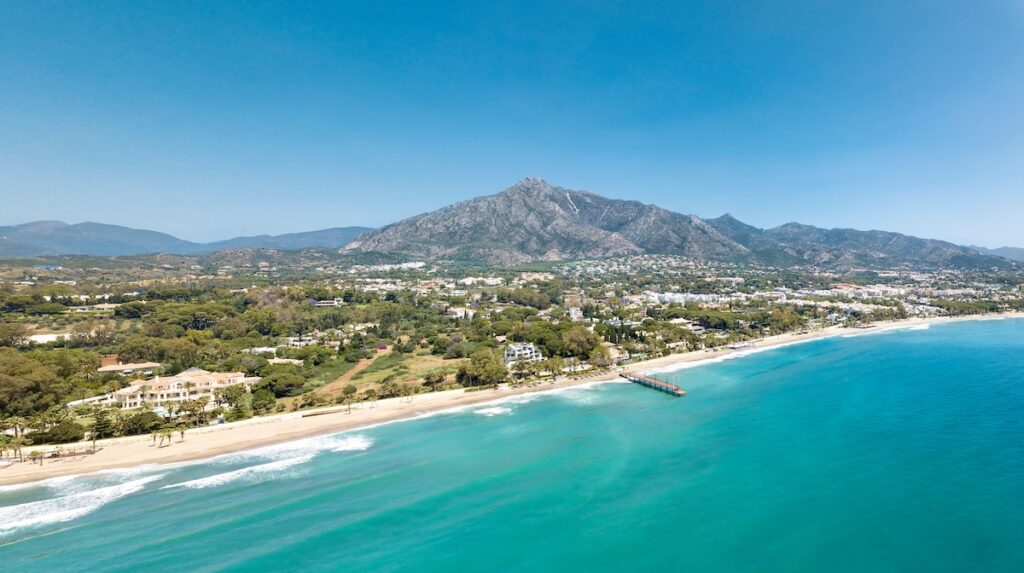
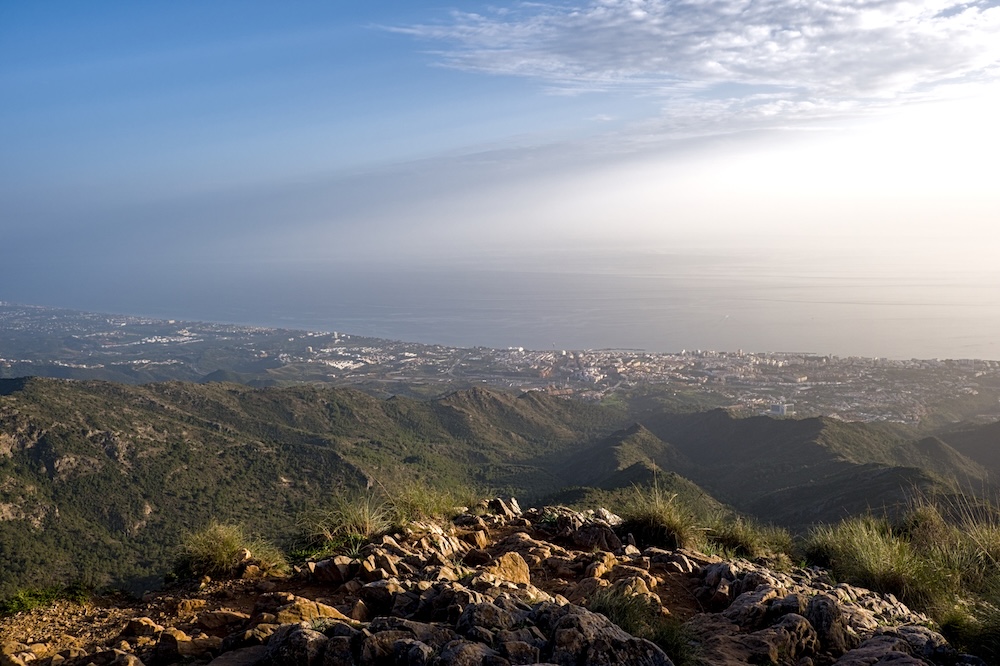
Directly behind Marbella rises the Sierra Blanca, whose best-known peak is La Concha. Together with the Sierra Bermeja further west, which is over 1,400 metres high, it forms a wall against cold winds from the north and north-west. That cold land wind is largely diverted towards the valleys of the Río Verde and the Río Guadalmina to the west and the valley of the Río Fuengirola to the east. As a result, Marbella itself remains relatively sheltered.
The result: in winter Marbella is often a few degrees milder than coastal towns without mountains behind them, and frost almost never occurs on the coast.
The Mediterranean as a thermostat
The sea acts as a gigantic heat store. In winter the water stays at around 15 °C, which keeps nights on the coast mild. In summer the sea has a cooling effect: around midday a sea breeze picks up and keeps temperatures on the coast pleasant, while inland Andalusia gets much hotter. On top of that, Marbella lies close to the Strait of Gibraltar, where the Atlantic Ocean and the Mediterranean meet. That too tempers the extremes.
More sunshine than almost anywhere in Europe
Thanks to its southern location and the protection of the mountains, Marbella enjoys around 300 sunny days a year and some 2,900 hours of sunshine. By comparison, Brussels and Amsterdam get around 1,500 to 1,700. Even in winter the sun shines in Marbella for an average of six to seven hours a day. You will find more detail month by month in our article What is the weather like in Marbella?
Differences between areas
There are differences within Marbella too. You will notice them as soon as you start viewing properties.
- Golden Mile and the town centre: the most sheltered, beneath La Concha. Mild winters and little wind.
- Sierra Blanca and Nagüeles: slightly higher, with more sun and fresh air, and pleasant evenings in summer.
- Nueva Andalucía: a valley that can be slightly warmer in summer and slightly cooler on winter evenings than the coast.
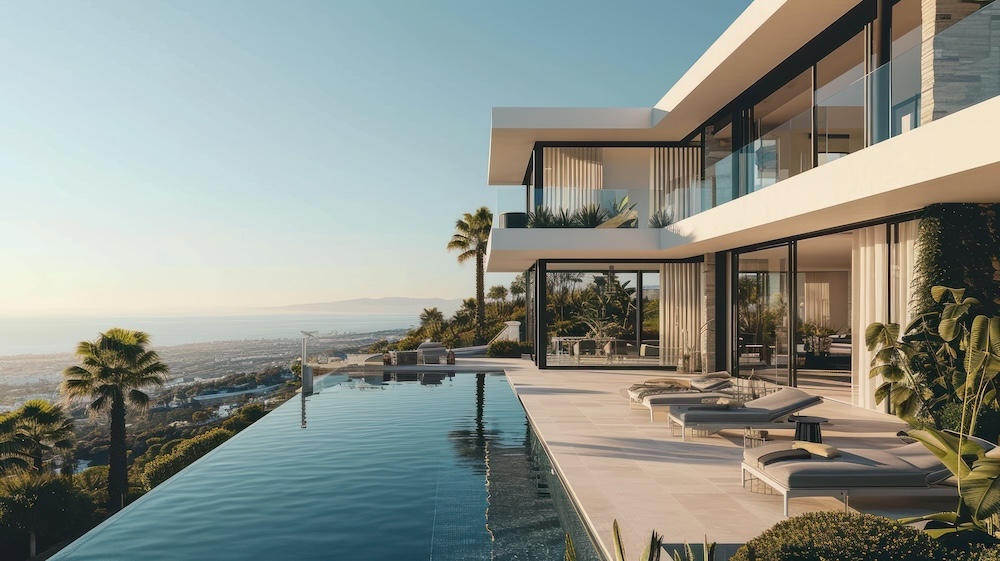
- Benahavís and La Zagaleta: higher up in the mountains. Sunny by day, cooler at night, and in winter sometimes a few degrees colder than by the sea. In return you get peace, nature and views as far as Africa.
- Marbella East (Elviria, Los Monteros): open to the sea, a little more wind, but wonderfully fresh summers.
What to bear in mind
A microclimate does not mean it never rains or is never cold. Between October and January a lot of rain can fall in a short time. In summer the hot land wind, the terral, can push temperatures above 35 °C for a few days. And now and then in summer a cool sea mist drifts over the beaches. Even so, these remain exceptions in a climate that most people find ideal.
What does the microclimate mean for your home?
If you are buying a home in Marbella, it is wise to factor the microclimate into your choice. A few tips from our experience:
- Orientation: a south or south-west-facing terrace gives you sun all year round, even in winter.
- Elevation: homes higher up often have better views and a cooler summer, but are slightly colder in winter.
- Build quality: if you also live in Marbella in winter, you are best off choosing good insulation, double glazing and underfloor heating. Modern new builds often score better on this than older villas.
- Pool: a heated pool extends the swimming season to almost the whole year.
Health and quality of life
Many people choose Marbella because they feel better there. More daylight, more outdoor living and more exercise all contribute to a healthy lifestyle. You can walk along the promenade, play golf or padel, or cycle in the mountains all year round. So it is no coincidence that Marbella is one of the favourite destinations for those who want to winter in the sun or move south when they retire.
Want to experience the microclimate for yourself?
The best way to feel the difference is to come and see for yourself. We would love to plan a viewing trip for you, visiting homes in different areas so you can tell straight away which setting suits you best. In the meantime, take a look at our luxury villas and new developments, or get in touch with us.
The microclimate and your garden
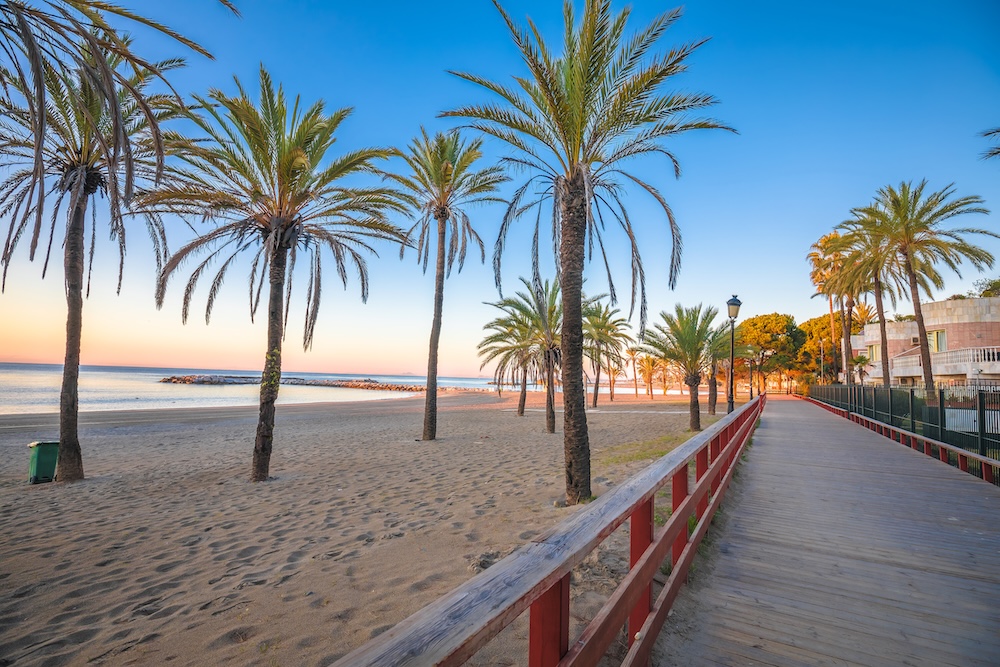
Thanks to the mild climate, Marbella grows plants you would only see in a greenhouse in northern Europe: bougainvillea, palms, olive trees, orange and lemon trees, and a whole range of subtropical plants. If you buy a villa with a garden, you can enjoy flowers all year round. Do choose plants that need little water, though, as there is hardly any rain in summer.
Frequently asked questions
Does Marbella really have its own microclimate?
Yes. The Sierra Blanca holds back the cold northerly wind and the sea moderates the temperature. As a result, winters are milder and summers more pleasant than in many other places in southern Spain.
Where in Marbella is it warmest in winter?
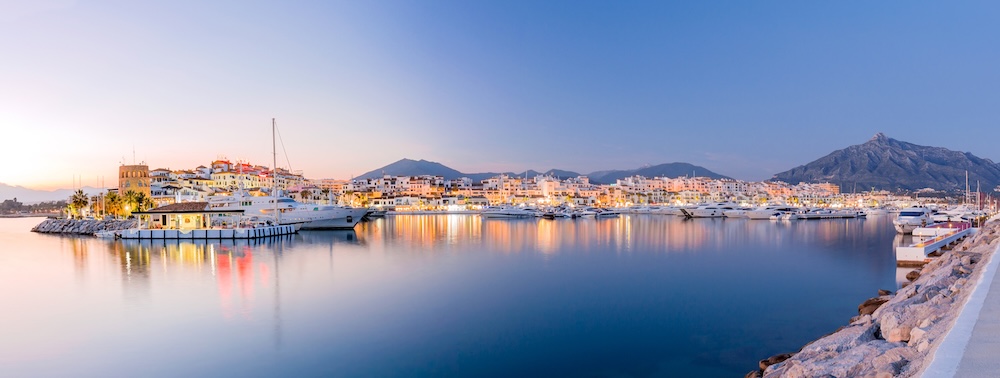
On the coast beneath La Concha: the town centre, the Golden Mile and Puerto Banús are the most sheltered.
Is it colder in Benahavís than in Marbella?
At night in winter, often by a few degrees, because it is higher up. During the day it is usually just as sunny.
How many hours of sunshine does Marbella get a year?
Around 2,900, spread over some 300 sunny days.